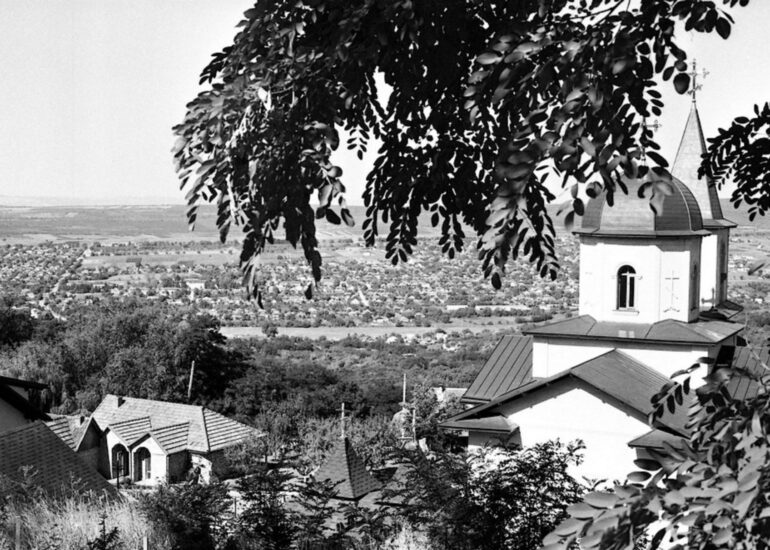
The Four Finger Church
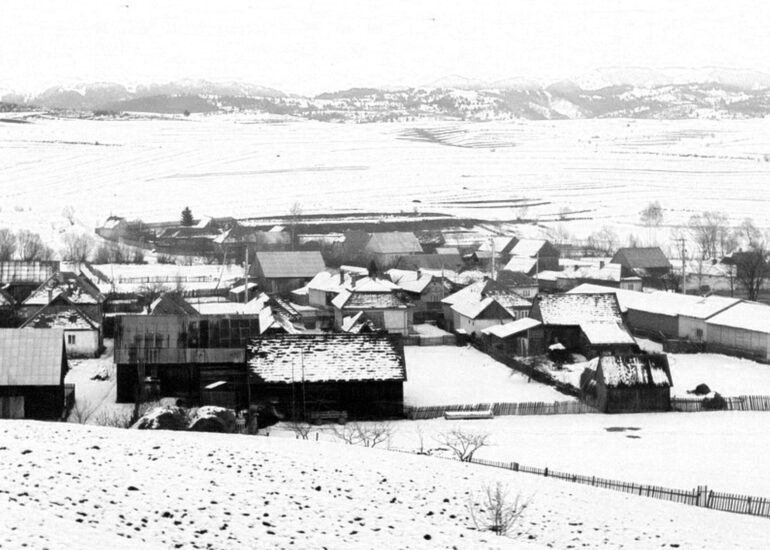
The weather began to turn, when I passed through the village of Poiana in Suceava county. What was a sunny day just 10 minutes before, became cloudy and dark very fast; what was but a summer breeze swiftly gathered strength and started to bend them smaller trees. No rain for now, but by the looks of things, it’s on its way.
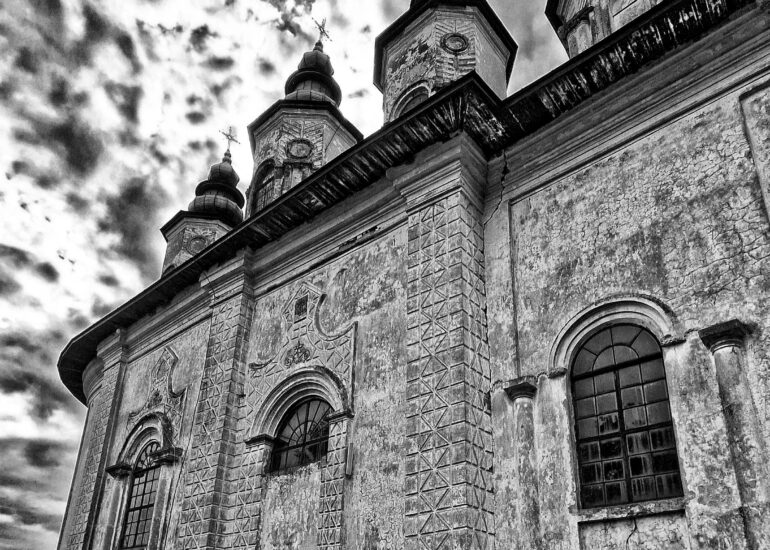
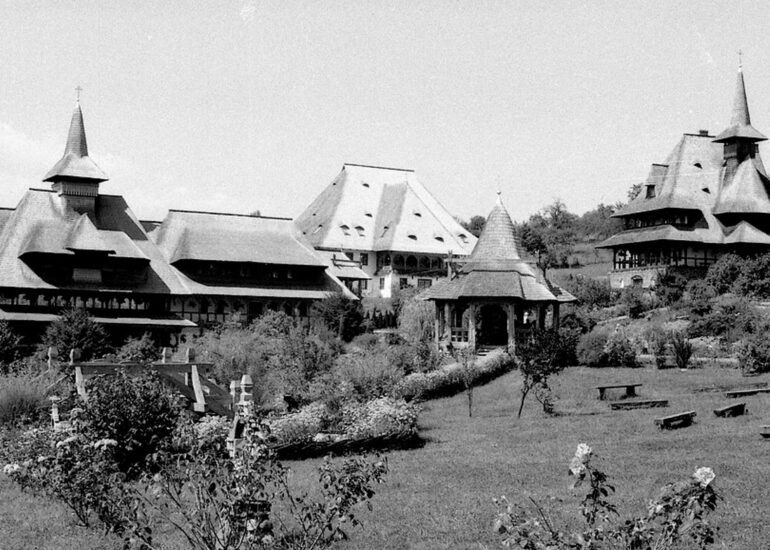
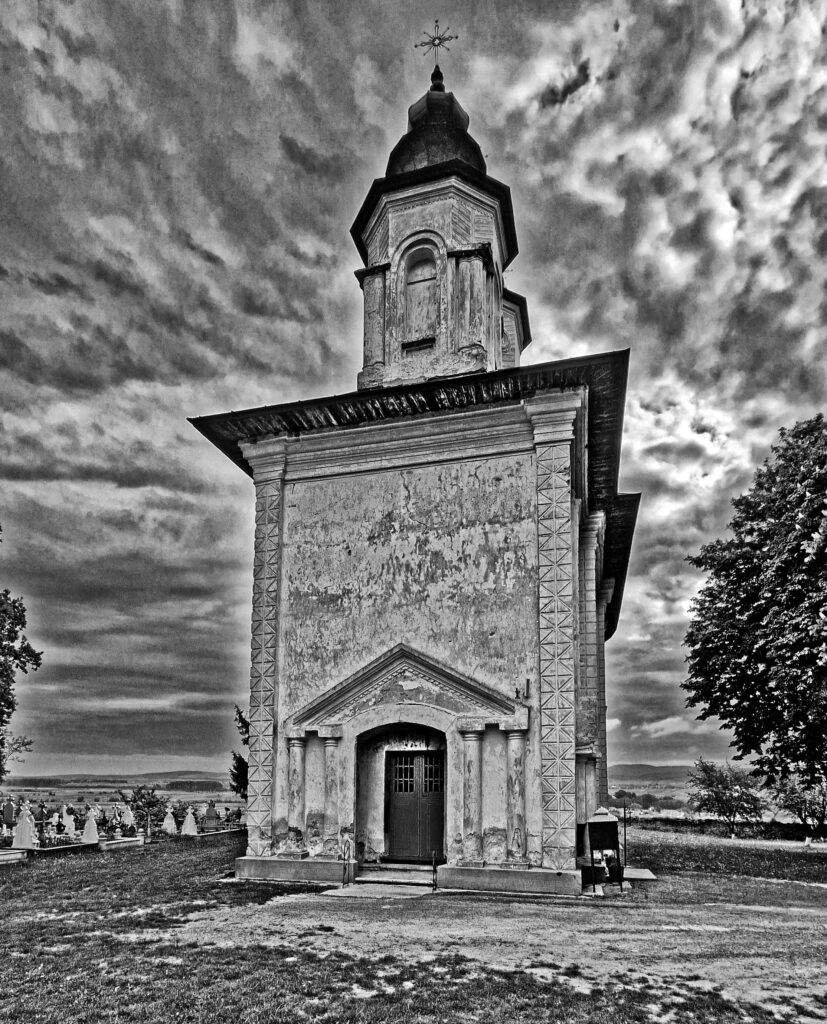
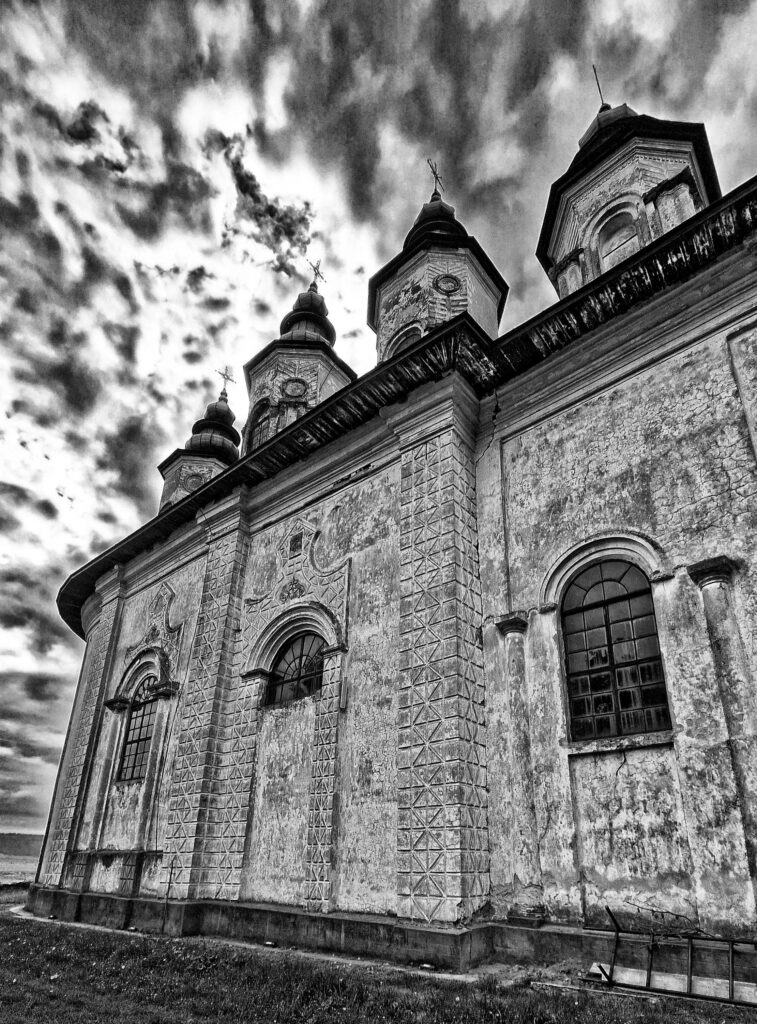
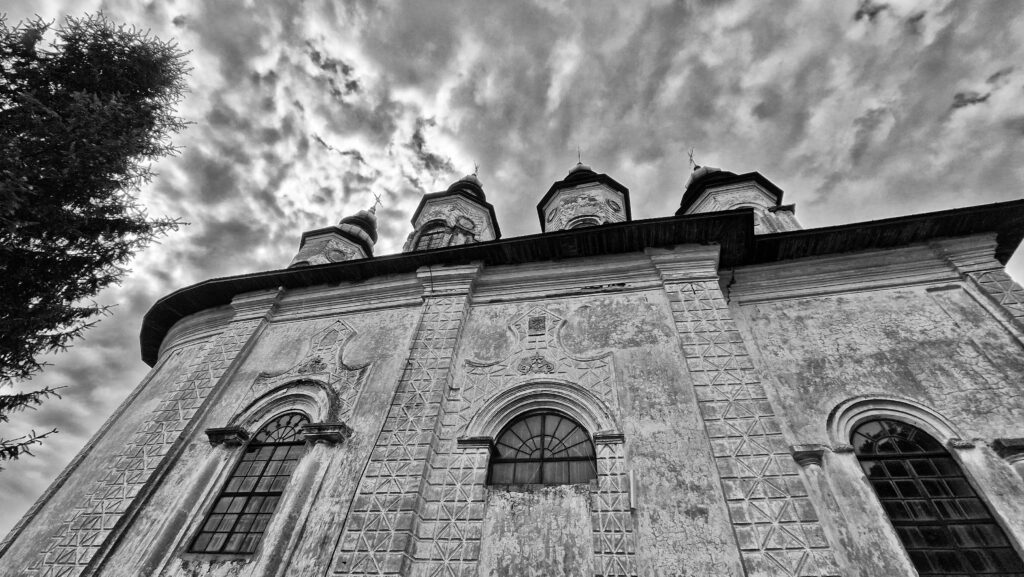
The reason for me being here is that whilst driving, I noticed what seemed to be an old church, with 4 towers, uneven in their height. My curiosity was of course piqued, so I went to check it out. The village was simply void of any humans and I had the feeling that I may be entering some place where I was not supposed to.
The church stood tall and imposing, but all gloomy and bereft of any outer adornments the orthodox churches have. No visible frescoes on the outer walls, no decorated doors, no sign of any activity within or without. From afar, but also from nearby, it gave the strong impression of an abandoned building, a place that had its purpose but now it has been forgotten. While not derelict, it may appear that only the very solid built of it makes it stand. There was no one to ask about the history of this, no information panel, no priest to talk to. This all added to the feeling I am an intruder.
Anyways, the internet proved to be my salvation:
” Called the “Four Finger Church”, this place of worship was built at the request of the boyar Lupu Răftivanu, after he survived a war. The boyar raised his hand and showed the craftsmen how he wanted the church to be, and they built the building exactly according to the shape of his hand.
After the death of the Răftivanu brothers, their grandson, Gheorghe Sterea, continued the construction of the church in Poiana. In 1914, he brought crystal glass for the windows and copper sheet for the roof from Austria. He also built a brick wall around the church, three meters high and almost two meters thick. Boyar Sterea intended to bring more monks to transform the church into a monastery. Unfortunately, during World War II, Gheorghe Sterea died, and the cells intended for the monks became ruins.
After the death of the boyar Gheorghe Sterea, the church ended up in the hands of the Soviets, who treated it with contempt. They destroyed the icons and the iconostasis, as well as everything else in the place of worship. The Soviets turned the church into a pigpen, raising over 100 pigs in the religious building and in the surrounding orchard.
After the war, the people of Dolhasca raised funds and repaired the church damaged by the Soviets. During the communist period, the place of worship suffered a new stage of degradation. The villagers destroyed the church’s surrounding wall and used the bricks either to build their own houses or to sell them to other people in neighboring towns.
The “Patru Degete” Church in the village of Poiana, was included on the List of Historical Monuments of Suceava County in 2004.”
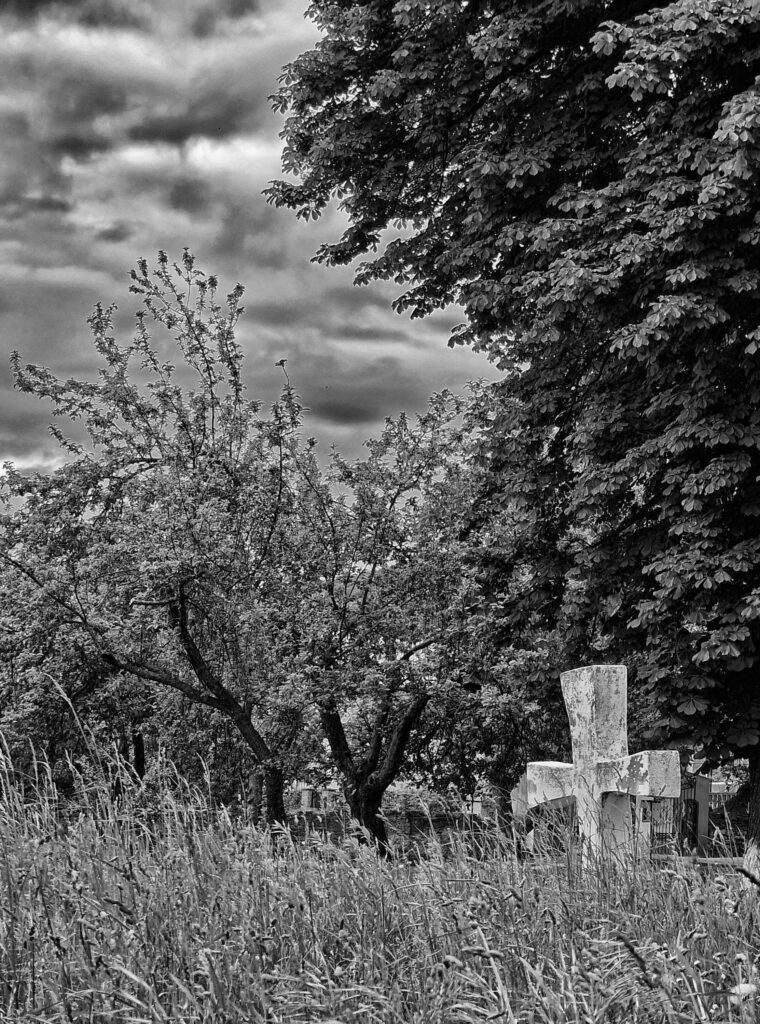
After taking a few photographs and trying to understand the architectural style, I took my farewell to the imposing but sad old thing. I was sorry not be able to visit inside, but I probably find a better time to visit and who knows, when I may even get to speak to a human being. And I may finally learn of the purpose and significance of the lonely cross I’ve seen.
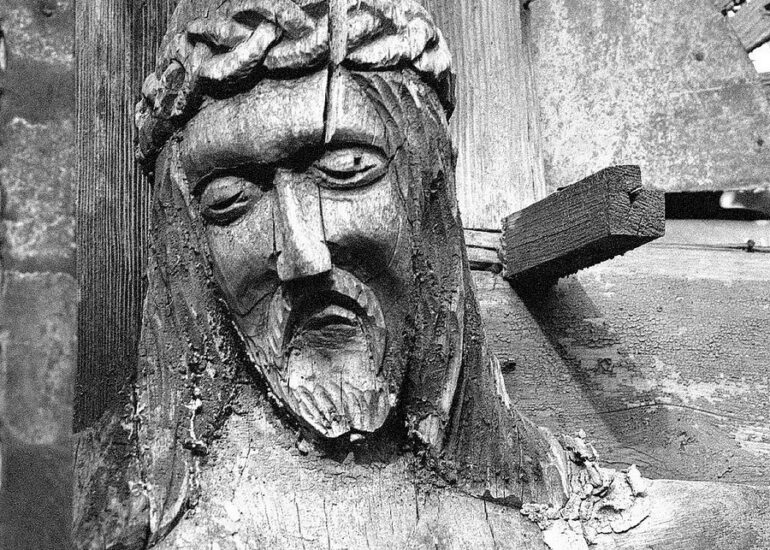
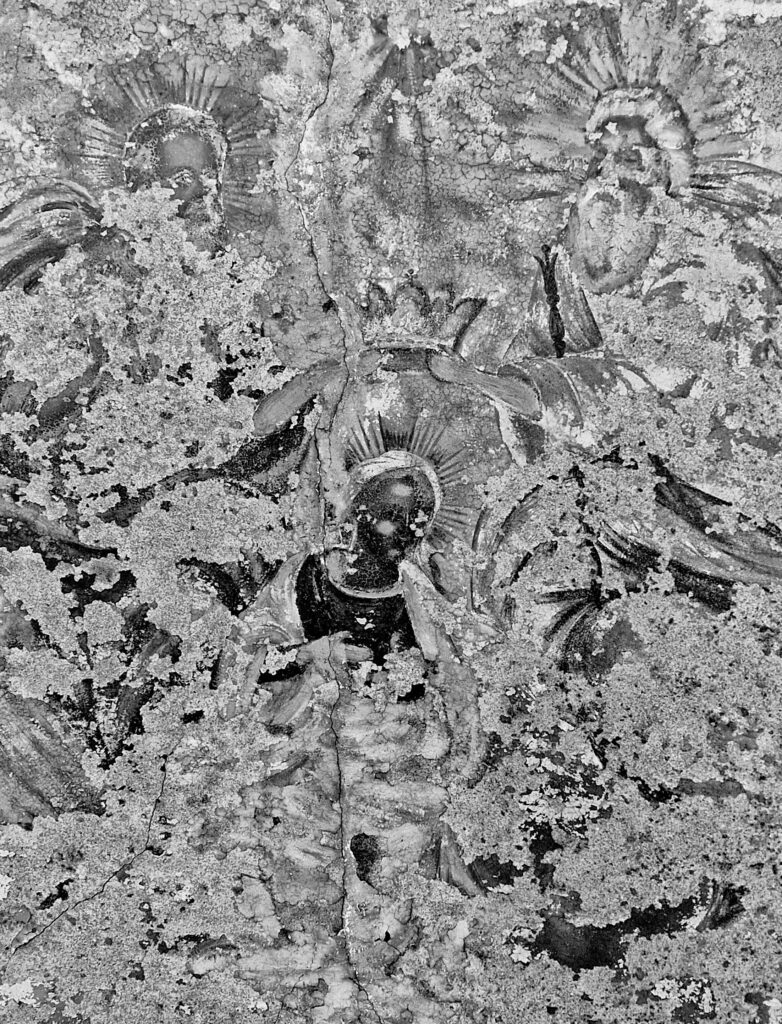
The only legible fresco seen here is the one on the ceiling above the entrance. Very old and unkept, it will probably be gone in a few years if nothing is done to restore it, and to keep the elements away. The mould and such are eating it away, and I guess this can be prevented. How or by whom, these should be the concerns of the community in this village.
I looked back once more, as I was exiting the church yard: this place is of a sadness hard to put into words; everything speaks of the fickle nature of humans, who tend to forget and abandon what was their proud place of worship once. Sic transit, as the old saying goes…
Recently in Portfolio